Moisture problems can develop behind finished basement walls and beneath flooring long before visible damage appears. Water intrusion, condensation, and uncontrolled humidity can encourage mold growth, weaken building materials, and lead to expensive repairs. Proper moisture and mold control begins before these surfaces are covered, helping protect your basement investment for years.
By WMI Home Solutions
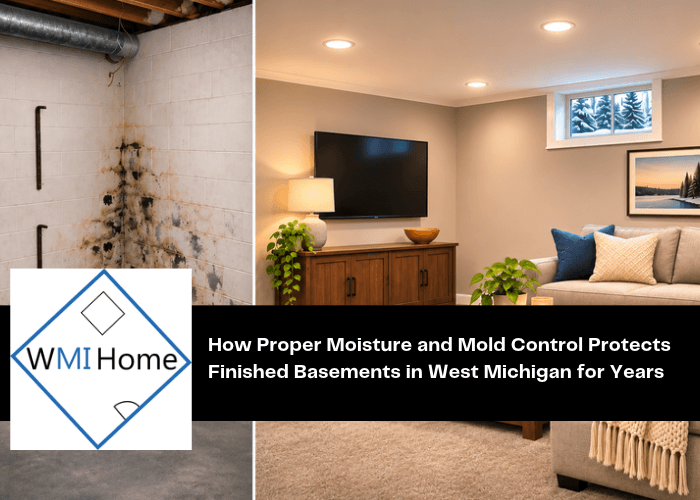
Moisture problems can develop behind finished basement walls and beneath flooring long before visible damage appears. Water intrusion, condensation, and uncontrolled humidity can encourage mold growth, weaken building materials, and lead to expensive repairs. Proper moisture and mold control begins before these surfaces are covered, helping protect your basement investment for years.
In Grand Rapids and throughout West Michigan, seasonal rainfall, snowmelt, freezing temperatures, and humid summers create changing moisture conditions around basement foundations.
Homeowners planning family rooms, home theaters, offices, or guest suites need construction systems that account for these conditions. Foundation drainage, insulation, moisture-resistant materials, and indoor humidity management all contribute to a comfortable, durable living space.
At WMI Home Solutions, we approach basement moisture protection as part of the overall finishing process. Our focus is on the construction details beneath finished surfaces, where early planning helps reduce hidden damage and future maintenance problems.
We help homeowners create functional basements designed around their families' needs, with long-term performance considered throughout the project.
Book a free consultation with WMI Home Solutions to plan a finished basement in Grand Rapids or West Michigan with moisture management, mold prevention, and long-term protection in mind.
What Causes Moisture and Mold Problems in Finished Basements in West Michigan?
Basement moisture problems develop when water enters through foundation openings, moves through building materials, or forms through condensation. Mold grows when sufficient moisture remains on susceptible materials, making early detection and moisture control essential.
Common Sources of Basement Moisture
Several conditions contribute to moisture accumulation in West Michigan basements:
- Foundation seepage: Water can enter through cracks, joints, and openings in foundation walls or floors.
- Poor exterior drainage: Improper grading, blocked gutters, or short downspouts can direct water toward the foundation.
- Condensation: Humid indoor air can release moisture when it contacts colder basement surfaces.
- Plumbing leaks: Damaged pipes or faulty connections can introduce water behind finished walls or beneath flooring.
- High indoor humidity: Persistent dampness creates conditions that support mold growth.
These problems can occur together. Addressing the source of moisture before finishing helps prevent damage to drywall, framing, insulation, and flooring.
How Can Homeowners Identify Basement Moisture Problems Before Remodeling?
Homeowners can identify potential moisture problems through visible warning signs, humidity monitoring, and inspection of foundation conditions. A thorough pre-finishing assessment helps determine whether drainage repairs, waterproofing, or other corrective work is necessary.
What Should Be Checked Before Construction?
Pay attention to these conditions:
- Musty odors: Persistent smells can indicate moisture accumulation or concealed mold.
- Water stains: Discoloration on concrete, framing, or existing finishes may reveal previous leaks.
- White mineral deposits: Efflorescence on masonry or concrete indicates that moisture has moved through the material.
- Damp floors: Moisture beneath stored materials or floor coverings can suggest slab-related moisture.
- Recurring humidity: Condensation on windows, pipes, or cold surfaces may indicate inadequate humidity control.
At WMI Home Solutions, evaluating these conditions helps inform the planning of basement finishing projects. Active water intrusion or existing mold contamination needs appropriate correction before materials are installed.
How Do Foundation Drainage and Waterproofing Protect Finished Basements?
Foundation drainage and waterproofing help keep liquid water from reaching finished basement materials. These systems manage groundwater, surface runoff, and water accumulation around the foundation, reducing the risk of leaks and structural moisture damage.
Managing Water Before It Reaches Finished Walls
Effective moisture protection begins around the home's exterior.
- Surface grading: Soil should direct rainwater and snowmelt away from foundation walls.
- Gutters and downspouts: Properly functioning drainage directs roof runoff away from the building.
- Foundation drainage: Perimeter drainage systems and sump pumps, where present or needed, help manage groundwater.
- Foundation openings: Cracks, penetrations, and window openings require appropriate sealing and waterproofing details.
Below-grade egress windows also require attention to window well drainage and connections around the foundation opening.
Our blog, Basement Egress Windows in Grand Rapids: What Goes Into Proper Installation and Long-Term Protection?, explains how these installation details affect basement safety and moisture protection.
Existing waterproofing failures may require specialized repairs before the basement is ready for finishing.
Which Insulation and Wall Materials Help Prevent Hidden Basement Mold?
Moisture-conscious basement walls use materials and construction methods that limit condensation and moisture accumulation. Proper insulation, air sealing, and vapor control help protect framing and drywall from prolonged dampness.
Choosing Materials for Basement Conditions
Material selection should account for the foundation's condition and the complete wall assembly.
- Closed-cell spray foam: Provides insulation and air sealing while limiting water vapor transmission at appropriate thicknesses.
- Rigid foam insulation: Certain products can provide continuous thermal protection when properly installed and sealed.
- Moisture-resistant drywall: Suitable products can improve durability in appropriate locations, although they cannot withstand ongoing leaks.
- Wall framing: Proper placement and separation from damp concrete help reduce moisture exposure.
Our spray foam insulation service supports basement air sealing, insulation, and moisture management.
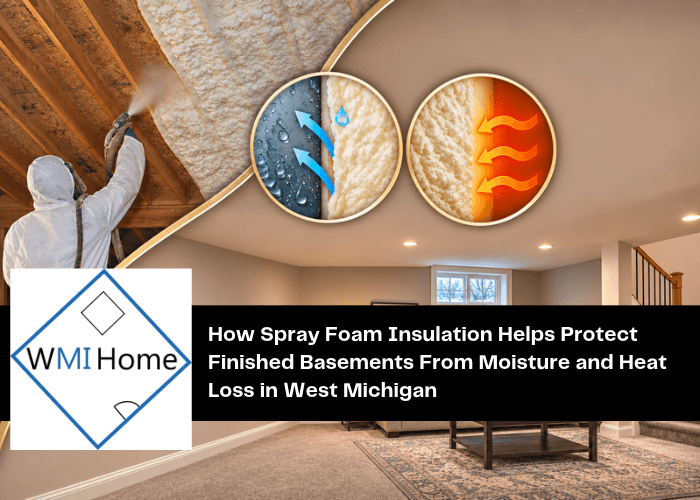
The blog, How Spray Foam Insulation Helps Protect Finished Basements From Moisture and Heat Loss in West Michigan, explains the relationship between insulation, condensation, and energy performance.
Insulation cannot stop active foundation leaks. Vapor barriers also require careful placement because an incorrectly designed assembly can trap moisture behind finished surfaces.
How Should Basement Floors Be Prepared to Reduce Moisture Damage?
Basement floors should be evaluated for moisture before finished flooring is installed. Concrete can transmit water vapor from the ground, and unsuitable flooring assemblies may trap moisture or suffer adhesive failure, swelling, and mold-related damage.
Preparing the Concrete Slab
Several construction decisions affect flooring performance:
- Assess moisture conditions: Investigate damp spots, previous flooding, and signs of vapor movement through concrete.
- Evaluate flooring compatibility: Select flooring materials and installation systems suitable for below-grade environments.
- Plan moisture control: Use appropriate vapor-control or moisture-mitigation systems based on slab conditions and product requirements.
- Protect drainage access: Keep necessary floor drains, plumbing cleanouts, and service points accessible.
Existing slabs may have unknown vapor barriers beneath them. Moisture testing and proper product selection help determine which flooring assemblies are appropriate.
These precautions are especially valuable in home gyms, family rooms, and guest suites where flooring must withstand regular use.
How Do Basement Plumbing and Room Layouts Affect Moisture Control?
Basement plumbing and room layouts affect where moisture is generated, how water is drained, and which areas require additional protection. Bathrooms, laundry rooms, and wet bars need properly planned plumbing connections, ventilation, and accessible maintenance points.
Designing Around Water-Using Spaces
When planning new fixtures, consider the following:
- Drainage connections: Properly installed underground plumbing supports wastewater removal and reduces the risk of leaks and backups.
- Bathrooms: Our bathroom remodeling work incorporates practical layouts, moisture-conscious materials, and appropriate ventilation.
- Laundry areas: Thoughtful laundry room design accounts for appliance connections, drainage, ventilation, and accessible shutoffs.
- Maintenance access: Valves, cleanouts, pumps, and other service components should remain accessible after finishing.
Our blog, How Underground Plumbing Supports a Long-Lasting Finished Basement in Grand Rapids, explains how early plumbing preparation protects completed living spaces.
Coordinating plumbing with walls, floors, and room layouts helps reduce disruptive repairs later.
What Humidity and Ventilation Measures Help Prevent Mold in Finished Basements?
Indoor humidity management helps prevent condensation and limits the moisture available for mold growth. Maintaining relative humidity around 30% to 50%, and consistently below 60%, supports healthier indoor conditions and protects susceptible materials.
Maintaining Comfortable Indoor Conditions
After construction, moisture control depends on everyday operation and maintenance.
1. Dehumidification
A properly sized basement dehumidifier helps manage excess humidity during warmer months. Continuous drainage, when properly installed, reduces the need to empty a collection tank.
2. Ventilation
Bathroom exhaust fans and properly vented clothes dryers remove moisture generated during daily activities. Exhaust air should discharge outdoors rather than into concealed spaces.
3. Heating and Cooling
Suitable HVAC distribution helps maintain consistent temperatures and reduces cold surfaces where condensation can develop.
4. Humidity Monitoring
A digital hygrometer provides a practical way to track relative humidity. Unexpected increases can signal drainage, ventilation, or equipment problems that need attention.
How Can Homeowners Protect Their Finished Basements From Moisture for Ten Years or Longer?
Long-term basement moisture protection depends on sound construction, routine monitoring, and timely maintenance. Systems installed during finishing require ongoing attention because foundation conditions, equipment performance, and household moisture levels can change over time.
Long-Term Maintenance Priorities
Homeowners should establish simple maintenance habits:
- After heavy rain: Check foundation areas, basement windows, and floors for signs of water intrusion.
- Seasonally: Clear gutters, inspect downspouts, and confirm that exterior drainage directs water away from the house.
- During humid months: Monitor indoor humidity and maintain dehumidifiers.
- Periodically: Test sump pumps where installed and keep their discharge routes clear.
- When warning signs appear: Investigate musty odors, damp materials, stains, or recurring condensation promptly.
If mold growth is discovered, the moisture source must be corrected and affected materials properly assessed. Extensive contamination or significant water damage may require specialized remediation before repairs or refinishing begin.
A well-maintained basement has a better chance of remaining comfortable and functional for many years, although no construction system can guarantee that future moisture problems will never occur.
Why Choose WMI Home Solutions for Moisture-Conscious Basement Finishing in West Michigan?
WMI Home Solutions approaches basement finishing through coordinated planning, practical material selection, and attention to the systems beneath finished surfaces. Our work considers how your household will use the basement while addressing construction details that influence long-term comfort and durability.
Our Approach to Lasting Basement Improvements
Our services include basement finishing, insulation, plumbing, egress window installation, and other remodeling work that contributes to a functional living space.
We value:
- Careful preparation: Identifying construction concerns before they become concealed.
- Coordinated installations: Planning insulation, plumbing, framing, and finishes around the basement's intended use.
- Practical material selection: Considering moisture exposure, maintenance, and everyday durability.
- Clear communication: Helping homeowners understand the decisions affecting their remodeling investment.
Learn more about us and see our projects to explore our approach to home improvement in West Michigan.
We aim to create finished basements that remain comfortable, useful, and easier to maintain as your family's needs change.
Call us: (616) 430-7228
Final Thoughts
Moisture and mold control should be considered throughout basement construction, from foundation assessment to insulation, flooring, ventilation, and long-term maintenance.
When you're investing in a finished basement in West Michigan, understanding what happens behind the walls is just as important as selecting the final materials. Proper planning reduces avoidable risks and supports a space your family can continue using for years.
The construction details you can no longer see after finishing often determine how well your basement performs a decade later.
FAQs: Proper Moisture and Mold Control Protects Finished Basements in West Michigan
1. How Do You Prevent Mold in a Finished Basement?
Control water intrusion, manage indoor humidity, use suitable insulation and moisture-resistant materials, and provide appropriate ventilation. Address existing moisture problems before installing finished walls or flooring.
2. What Is the Best Humidity Level for a Finished Basement?
A relative humidity level around 30% to 50% is a practical target. Keeping humidity consistently below 60% helps reduce conditions that support mold growth.
3. Can Spray Foam Insulation Prevent Basement Mold?
Spray foam insulation can reduce air leakage and condensation when properly selected and installed. It cannot eliminate mold risk or repair active foundation leaks.
4. Should Basement Waterproofing Be Completed Before Finishing?
Existing water intrusion should be corrected before basement finishing begins. The required solution depends on the foundation condition, drainage performance, and source of moisture.
5. How Long Can a Properly Finished Basement Remain Protected From Moisture?
A carefully constructed and maintained basement can remain functional for ten years or longer. Its performance depends on reliable drainage, appropriate materials, humidity control, and timely maintenance. Long-term protection begins with decisions made before the first wall is covered.